The material you choose shapes everything about an urn: how it feels in your hands, how long it lasts, and where it can safely go. The right answer is almost always the one that fits where the urn will live.
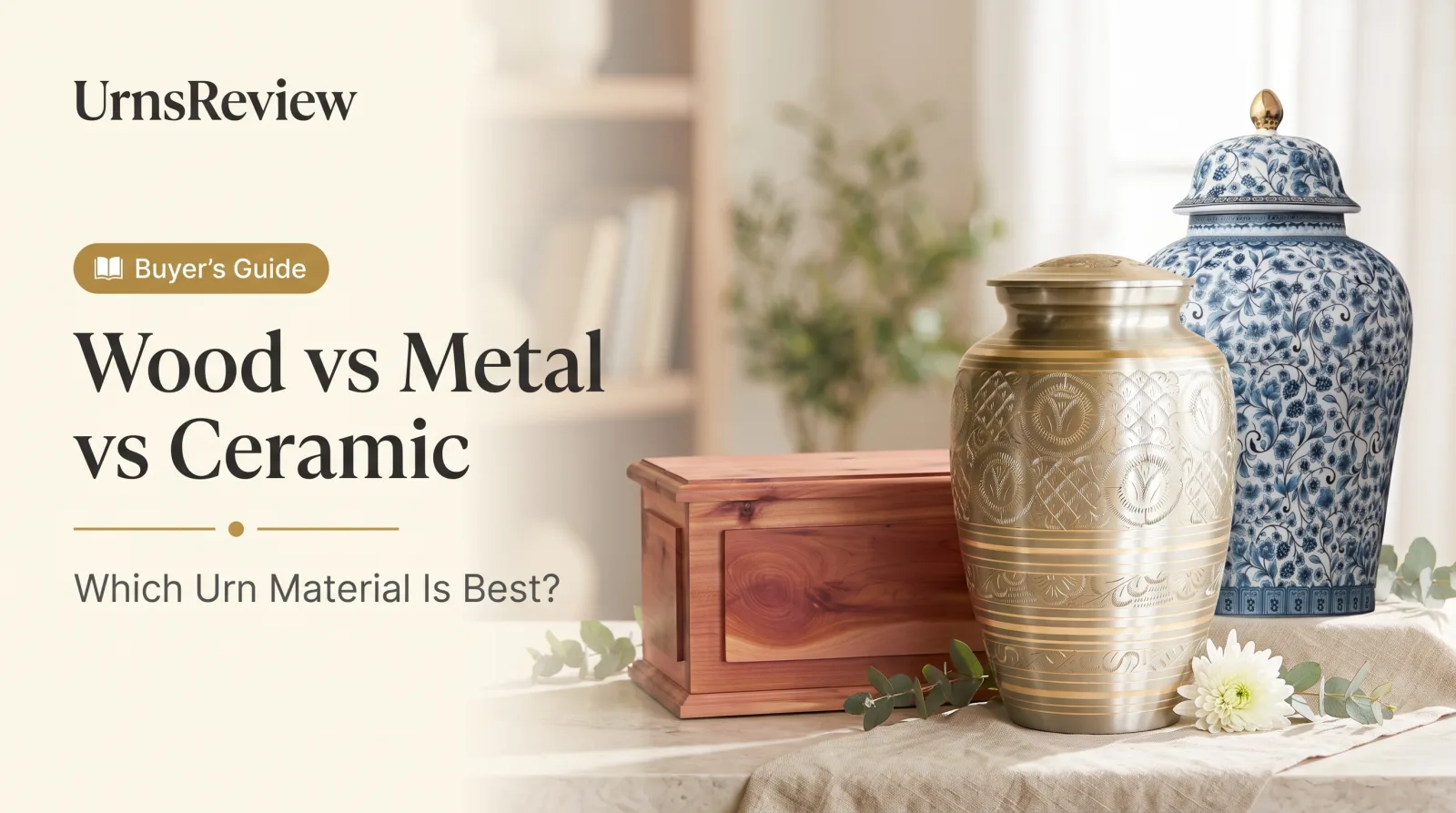
For most families, that means metal for burial or travel, wood or ceramic for a home display, and biodegradable for scattering or a green farewell. The sections below explain each material honestly, including the weak points.
Material comparison at a glance
| Material | Durability | Weight/feel | Best use | Look | Typical price |
|---|---|---|---|---|---|
| Wood (oak, walnut, cherry) | High indoors; can warp if damp | Medium, warm | Home display, mantel | Warm, natural, classic | $50-$250 |
| Metal (brass) | Very high | Heavy, dense | Burial, formal display | Traditional, ornate | $60-$300 |
| Metal (aluminium) | Very high | Light | Travel, burial, any use | Modern or engraved | $40-$150 |
| Metal (stainless steel) | Very high | Medium-heavy | Burial, outdoor | Clean, modern | $60-$200 |
| Ceramic / porcelain | Medium (fragile to impact) | Medium | Home display, art piece | Colorful, artistic | $60-$400 |
| Glass (hand-blown) | Low-medium | Light-medium | Decorative display | Unique, luminous | $80-$500 |
| Stone / marble | Very high | Heavy | Home or outdoor display | Classic, premium | $100-$600 |
| Biodegradable | Low by design | Light | Scattering, green burial | Simple, natural | $20-$100 |
Wood urns: warm, engravable, best for home
Wood is the material most people picture when they think of a traditional urn. Oak, walnut, and cherry are the most common choices: all three are dense, stable hardwoods that take engraving cleanly and develop a richer look over time.
What wood does well. A well-made hardwood urn feels substantial and warm. Laser engraving or hand carving produces crisp, permanent lettering, so names, dates, and short messages stay readable for decades. Wood suits a mantel, a bookshelf, or a place of honor in a room.
What wood does not do well. Wood is sensitive to sustained damp. An urn stored in a basement, garage, or humid climate can warp, crack at the seams, or develop discoloration. Wood is also not approved for all burial situations. Many cemeteries and columbarium facilities require a sealed metal or stone urn for ground or niche placement. If burial is possible at any point in the future, choose metal and keep the question open.
Wood urns are available with box joints, dovetail corners, and various stain finishes. A quality piece costs roughly $80 to $200. Avoid units with thin panels or stapled joints, which do not age as well.
A note on wood and humidity. The biggest practical risk with wood is not normal indoor air but the kind of sustained damp that comes from an unheated room, a waterfront home, or a climate without air conditioning. If you live somewhere hot and humid, keep the urn in a climate-controlled space, and never place it directly on a surface that holds moisture, like a bathroom shelf or a windowsill during rain season.
Metal urns: the most durable option across the board
Metal is the workhorse material. Brass, aluminium, and stainless steel each have a distinct character, but all three share the key property that makes metal the default recommendation for anything beyond a home display: they resist moisture, impact, and temperature changes that would damage other materials.
According to the NFDA, the U.S. cremation rate passed 60% in recent years, meaning millions of families face this choice. Metal urns are the dominant format in that market for good reason.
Brass is the traditional choice. It is dense, substantial, and carries a formal weight that suits a classical or religious aesthetic. Brass can develop a patina over time, which many families find beautiful. It is heavier than aluminium, so it is less convenient for travel. Most cemetery and columbarium guidelines accept brass without question.
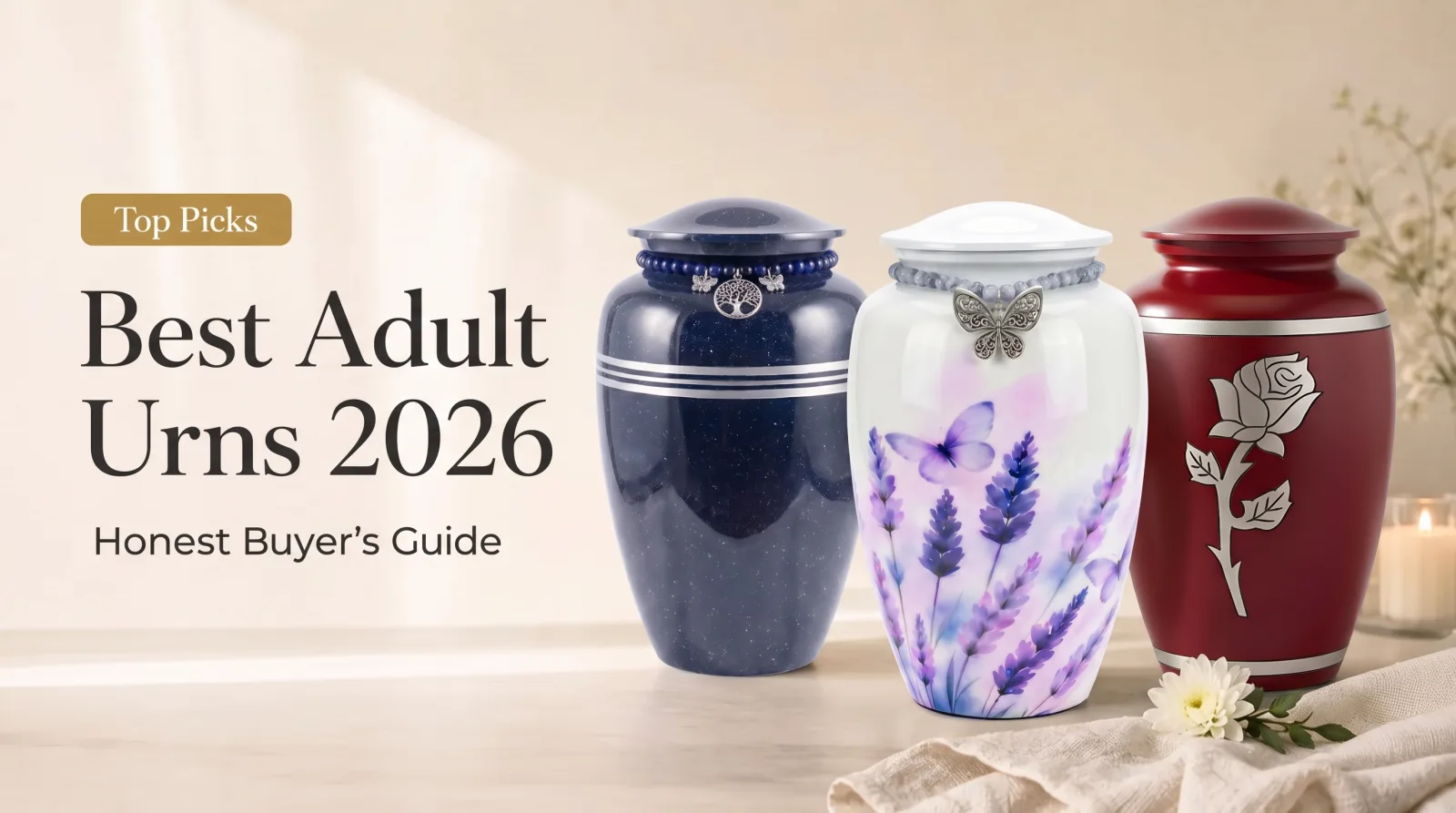
Aluminium is lighter, completely rust-proof, and just as structurally sound. It is the most practical choice for families who want durability without the weight. A full 220 cubic inch aluminium urn typically weighs under two pounds empty. The Crimson Red Rose Urn is a real example: 220 cubic inches, solid aluminium construction, a hand-engraved rose pattern, a threaded screw lid that will not come loose, and a velvet bag included. It costs $59.99 and carries a 4.9-star rating. It also comes in blue and purple for families who want a different palette.
Stainless steel sits between the two: heavier than aluminium, slightly lighter than brass, and extremely resistant to surface corrosion. It tends toward a more contemporary appearance.
All three metals accept a threaded lid, which is the most secure closure type available. A threaded lid screws down and will not open if the urn is knocked or carried in a bag. If the urn will ever travel, a threaded metal lid is the safest design by a wide margin.
On finish and color. Metal urns come in a wide range of surface treatments: painted, powder-coated, anodized, brushed, polished, and hand-engraved. Anodized and engraved finishes tend to hold up best over time, since the color or pattern goes into the metal surface rather than sitting on top of it. A painted or printed finish can chip or fade with years of handling. The Crimson Red Rose Urn uses a hand-engraved pattern, which is why the design remains crisp rather than fading with age.
Ceramic and glass urns: artful, but fragile
Ceramic, porcelain, and hand-blown glass urns are a different category. They are more accurately described as art pieces that serve as urns than as utilitarian vessels. The glaze colors, forms, and finishes available in ceramics and glass are simply not replicable in wood or metal, and for families who want something truly distinctive on display, the trade-off may be worth it.
The honest trade-off is fragility. A ceramic urn can crack or chip from a single hard knock. Glass is even more vulnerable. Neither is safe for travel in luggage or carry-on bags, and neither should go to burial or a columbarium niche. If you choose ceramic or glass, plan for it to stay in one stable, low-traffic location permanently.
Quality hand-thrown ceramic or hand-blown glass urns from small studios can cost $200 to $500 or more. Production ceramic urns are available for less. At any price, the key is to confirm the capacity (interior cubic inches) before buying, since the artistic shape can make it hard to judge volume from a photo.
Stone and marble urns: heavy, lasting, premium
Stone urns, including solid marble, onyx, and cultured stone composites, occupy a premium niche. They are extremely durable, resistant to moisture, and carry a permanent quality that many families find fitting for a lasting memorial.
The main drawback is weight. A solid marble urn can weigh eight to fifteen pounds or more when empty. That makes it impractical for travel and challenging to move between rooms. It suits a dedicated space: a mantel, a memorial shelf, or a garden alcove with some weather protection.
Cultured stone (a resin-and-stone composite) offers a similar look at a lower price and reduced weight. It is worth confirming the material with any vendor, since "stone-look" and "solid stone" are not the same.
Biodegradable urns: made for scattering and green burial
If the plan is to scatter cremated remains, place them in a water ceremony, or bury them in a natural or green burial site, a biodegradable urn is the right tool. These urns are made from materials like compressed paper, natural salt, or woven plant fibers that break down within weeks to months.
They are not built for long-term display, and they are not meant to be. The design goal is a dignified container that returns to the earth gently. For everything you need to know about this option, the biodegradable urns guide covers material types, water vs. land use, and what to expect.
How to choose by location
The fastest way to narrow the choice is to decide where the urn will live. Everything else follows.
Home display (mantel, shelf, or dedicated space). Wood, ceramic, glass, stone, and metal all work. Choose the material and finish that looks right in the room and feels meaningful to you. Metal is fine here too. Many families choose a beautiful metal urn for display precisely because it gives them flexibility later.
Burial or ground interment. Metal (brass, aluminium, or stainless steel) is the right choice. Ground moisture, pressure, and temperature variation will damage wood and crack ceramic over time. Most cemeteries explicitly require or strongly prefer metal for in-ground placement. Stone works as well, though it is heavy to transport.
Columbarium niche. Metal or stone. Niches are typically climate-controlled, which is easier on all materials, but most facilities have size and material requirements. Confirm the niche dimensions before buying, because many columbarium openings are only 11 to 12 inches wide. Our urn sizing guide covers the standard niche sizes.
Travel (moving between family members, flying, or international transport). Metal with a threaded lid. The TSA and most international customs authorities require cremated remains to pass through X-ray, and they must be in a container that can be screened or opened. A wooden or ceramic urn that cannot be screened may be pulled from your bag. A metal urn in an opaque container should always be accompanied by the cremation certificate.
Return to nature (scattering or green burial). Biodegradable. See the dedicated guide linked above for the full breakdown.
Not sure where it will end up? Choose metal. It is the only material that works in every scenario without restriction. If circumstances change, a metal urn you bought for home display can go to burial later without any problem.
What to think about beyond material
Material is the first decision, but a few other details affect how well an urn works in practice.
Lid type. A threaded screw lid is the safest option across all materials. Friction lids and rubber stoppers are common on lower-cost urns and they work fine for display, but they carry a real risk of opening if the urn is moved or dropped. If you expect the urn to travel, or if children are in the home, a threaded closure gives genuine peace of mind.
Capacity. The standard guide is one cubic inch of capacity per pound of body weight before cremation. Most adults need 200 to 220 cubic inches. A fuller breakdown is in the what size urn do I need guide. Material choice does not affect capacity directly, but smaller art ceramic pieces are sometimes sold as "adult" urns without meeting that threshold. Always check the listed interior volume.
Ease of filling. All urns are filled through the top or through a bottom panel. Top-fill urns with a threaded lid are the most straightforward. Bottom-panel urns require removing a fitted piece and can be fiddly. This is worth checking in product descriptions if you plan to fill the urn yourself.
A word on keepsake urns
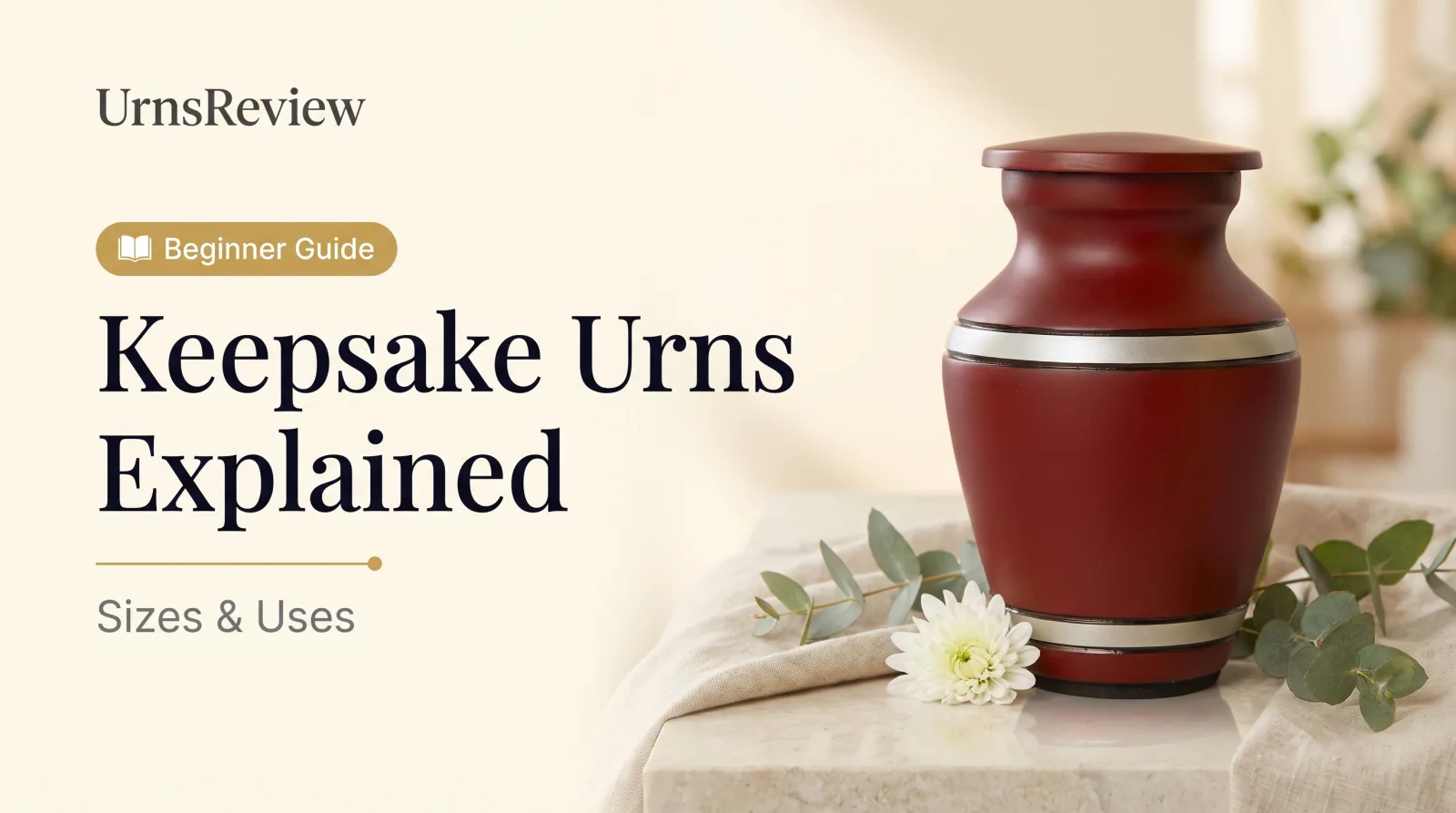
If more than one family member wants to keep a portion of the ashes, a keepsake urn holds a small amount rather than a full set of remains. The Crimson Small Keepsake Urn is a matching companion piece to the Rose Urn for families who want a consistent look. Check the Amazon listing for current capacity and price. For a full explanation of how families use these, the keepsake urns guide covers the options clearly.
What UrnsReview is
UrnsReview is an independent, reader-supported guide to cremation urns and memorial choices. We are not a funeral home and we do not manufacture or sell urns. Our guides are written to answer real questions plainly, checked against sources including the National Funeral Directors Association and the Cremation Association of North America, and updated when products change. If you want a broader starting point, the choosing and buying hub brings every guide together in one place.
The bottom line
For home display, wood and ceramic are warm and personal choices. For anything that needs to last through burial, travel, or uncertain future plans, metal is the safest call. If scattering or a green farewell is the plan, biodegradable is the right tool.
Material is one piece of the decision. For the full picture, including capacity, lid types, and specific product recommendations, the best cremation urns for adults guide and the what to do with cremated ashes overview are worth reading before you decide.
Frequently asked questions
Which urn material lasts the longest? Metal. Brass, aluminium, and stainless steel resist rust, cracking, and tarnish for decades. Solid hardwood and stone also last for generations when kept indoors, out of direct moisture. Ceramic and glass are beautiful but fragile and can crack or chip with handling.
Is wood or metal better for burial? Metal is better for burial. It resists ground moisture and pressure far better than wood, which can warp or degrade over time when buried. The NFDA and most cemetery guidelines accept metal urns for in-ground burial without restriction. Wood is best reserved for home display.
Are ceramic urns durable enough for everyday display? Yes, for display on a stable shelf or mantel. Ceramic and porcelain urns are not suitable for travel or burial because they can crack from impact or freeze-thaw cycles. Keep them in a low-traffic spot and they will hold up well for years.
What is the lightest urn material? Aluminium is the lightest common metal used for urns. A full 220 cubic inch aluminium urn typically weighs under two pounds empty. That makes it easy to move between rooms, carry in a bag for travel, or handle for a scattering ceremony.
Can I engrave a wooden urn? Yes. Wood is one of the easiest materials to engrave. Names, dates, and short messages can be laser-engraved or hand-carved into oak, walnut, or cherry with clear, lasting results. Metal urns can also be engraved; ceramic and glass are harder to engrave cleanly.
What urn material is best for a columbarium niche? Metal or stone. Both hold up in the humidity and temperature changes typical of columbarium vaults. Check with the facility first, as some have specific size or material requirements. Wood and ceramic are generally not recommended for niches.
How do I choose between wood, metal, and ceramic? Start with where the urn will live. Home display: wood, ceramic, or metal all work. Burial or columbarium: metal or stone only. Travel: metal with a threaded lid. Scattering or green burial: biodegradable. Then choose the look and finish that feels right for your family.