Figuring out the right urn size is the first practical question most families face, often at a very hard time. The good news is that the math is simple and the answer is almost always the same for a standard adult. This guide lays out the numbers clearly, explains the few cases where you need a different size, and gives you a table you can use in under a minute.
How urn size is measured
Cremation urn capacity is stated in interior cubic inches, not exterior dimensions. That distinction matters. Two urns that look identical on a shelf can have very different wall thicknesses, and the exterior size tells you nothing about how much ash fits inside.
When a product listing says "200 cubic inches," that should mean 200 cubic inches of usable interior space. If a listing only shows height and diameter, ask the seller to confirm the interior volume. Buying an urn based on exterior dimensions alone is a common and avoidable mistake.
For more on what those cubic-inch numbers mean in practice, see our full cubic-inch breakdown for adults.
What size urn does a standard adult need?
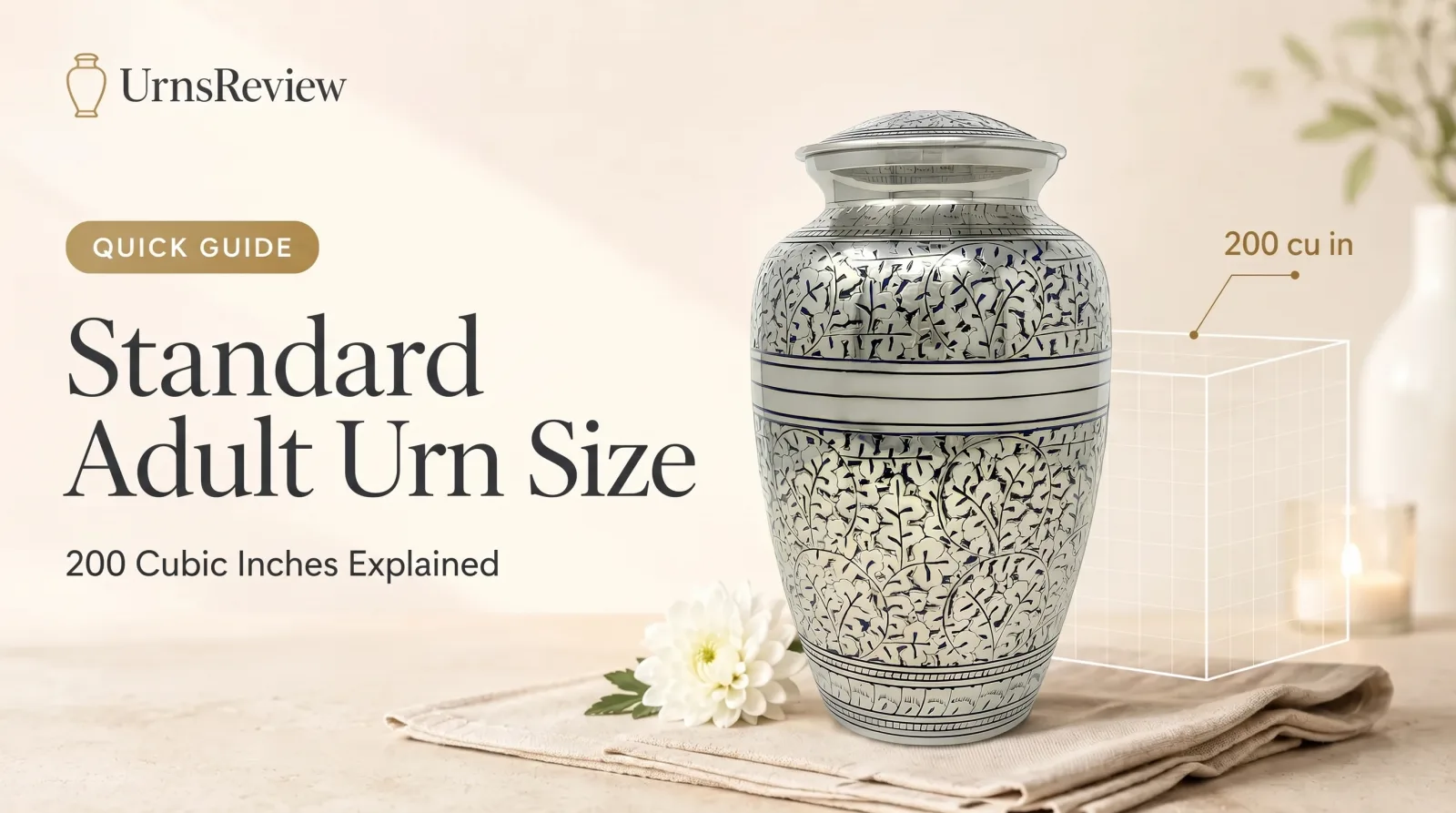
For most adults, the answer is 200 to 220 cubic inches.
The Cremation Association of North America (CANA) confirms that a typical adult produces between 183 and 213 cubic inches of cremated remains. The industry rule of thumb that gets you there: one pound of body weight before cremation equals roughly one cubic inch of ashes. A person who weighed 180 pounds before cremation will leave approximately 180 cubic inches of remains.
This rule holds because the volume of cremated remains comes from bone, not body fat. Muscle and fat burn away entirely during cremation. What remains is bone mineral, ground to a coarse powder. That is why late-life weight loss, even significant amounts, rarely changes the cubic-inch figure in any meaningful way.
A 220 cubic inch urn covers most adults with a comfortable margin. You do not need an exact match; a slightly larger urn is always fine.
Weight-to-capacity table
Use the person's weight before any illness or end-of-life weight loss.
| Body weight before cremation | Estimated ash volume | Recommended minimum capacity |
|---|---|---|
| Up to 100 lb | 85-100 cu in | 100 cu in |
| 100-125 lb | 100-125 cu in | 130 cu in |
| 125-150 lb | 125-150 cu in | 150 cu in |
| 150-175 lb | 150-175 cu in | 175 cu in |
| 175-200 lb | 175-200 cu in | 200 cu in |
| 200-220 lb | 200-220 cu in | 220 cu in |
| 220-250 lb | 220-250 cu in | 270 cu in |
| Over 250 lb | 250-325+ cu in | 325+ cu in |
The "recommended minimum" adds a small buffer above the estimate. If the actual weight is uncertain, use the next row up. An urn can hold less than its full capacity with no problem; ashes do not expand and do not need to fill the container.
What if the person was larger than average?
If your loved one weighed more than about 220 pounds before cremation, a standard adult urn will likely be too small. Choose an oversized urn rated at 250 cubic inches or more, sometimes listed as 300 or 325 cubic inches.
Most large-capacity urns are not labeled "oversized" outright. Look for the interior cubic inch figure in the product description. If it is not listed, ask before buying.
The rule that removes almost all the anxiety: an urn can never be too large. Choosing one size up costs nothing extra and guarantees everything fits. Choosing one size too small means the cremation provider will return some ashes separately in a temporary plastic container.
See the urn sizing hub for additional guidance on larger adults and bariatric sizing.
Our recommended urn for most adults
The Crimson Red Rose Urn is the urn we point most families toward. It holds 220 cubic inches, made from solid aluminium with a hand-engraved rose, a secure threaded screw lid, and a protective velvet bag. It costs $59.99 and carries a 4.9-star rating. It also comes in blue and purple.
At 220 cubic inches it fits the great majority of adults with a margin, which is exactly the buffer we recommend. The threaded lid will not come loose in storage or during a move. See our full adult urn guide for a complete breakdown of what makes it the right choice for most families.
What about a larger adult?
If your loved one weighed more than 220 pounds, the Rose Urn may come up short. For adults in the 220-to-280-pound range, look for a 270-to-300 cubic inch urn. For those above 280 pounds, a 325-plus cubic inch model is the safer choice.
When you buy through UrnsReview, an independent, reader-supported site fact-checked against CANA and NFDA data, the sizing recommendations you see are based on published industry figures, not on steering you toward a higher-priced product.
Child and infant urn sizing
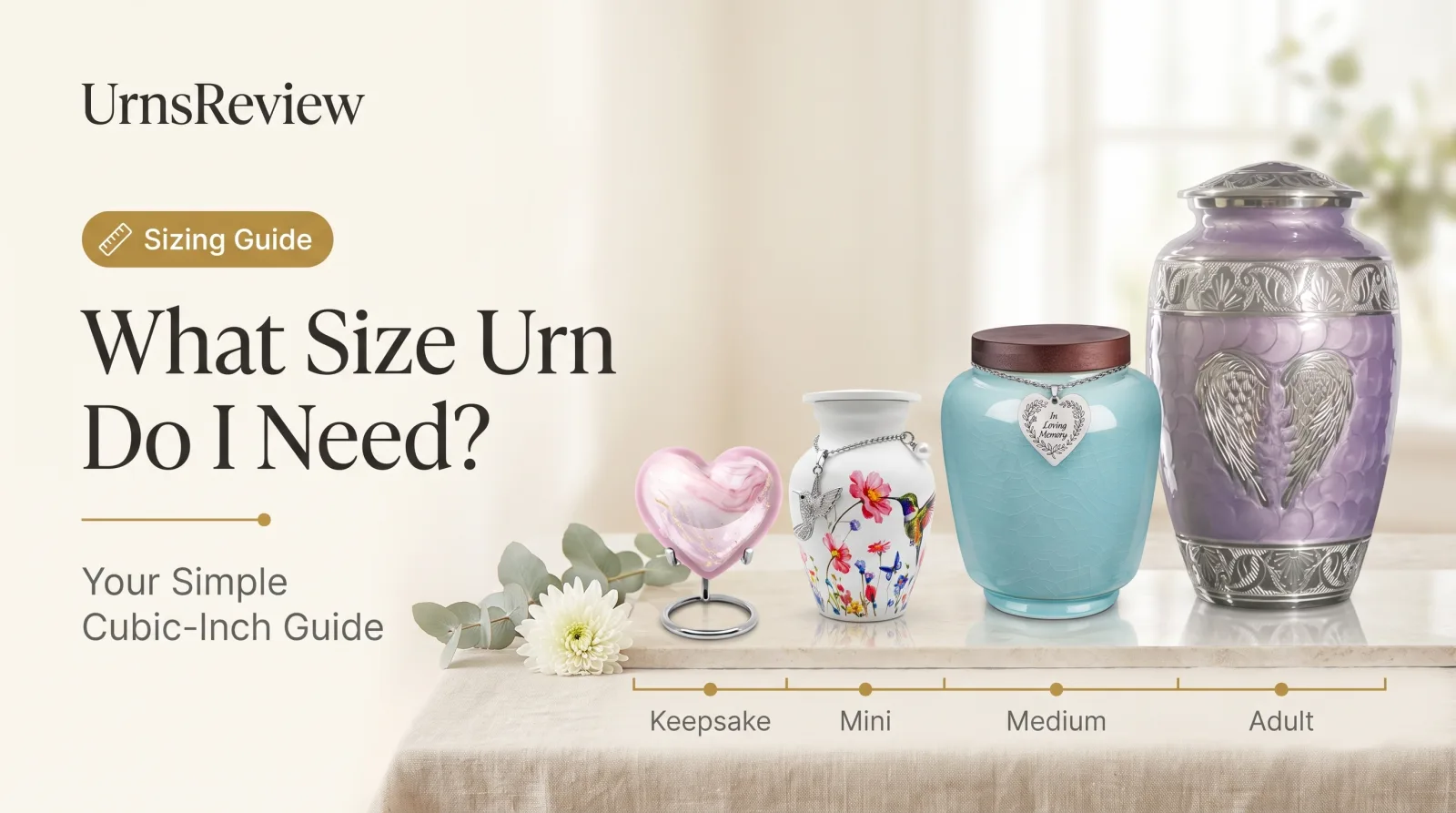
The same 1 lb equals 1 cubic inch rule applies for children. A child who weighed 60 pounds would leave roughly 60 cubic inches of remains. Urns in the 50-to-100 cubic inch range are made specifically for children.
Infant urns are typically under 25 cubic inches. These are a separate category from small adult keepsake urns, which hold a token portion rather than a complete set of remains.
Always confirm the interior cubic-inch capacity with the seller for any child or infant urn, since these listings are less consistent about stating internal volume clearly.
Companion urns for two people
A companion urn is designed to hold the ashes of two adults together, typically around 400 cubic inches of total capacity. Many couples arrange for this in advance. Some families choose a companion urn after the first partner passes and later add the second.
Companion urns are a separate category from oversized single-person urns. The 400 cubic inch figure assumes two average adults; if both were larger, look for a 450-to-500 cubic inch model.
Keepsake urns for sharing ashes
When several relatives each want to keep a personal portion, keepsake urns let you divide the remains without reducing the main urn to something too small to be meaningful.
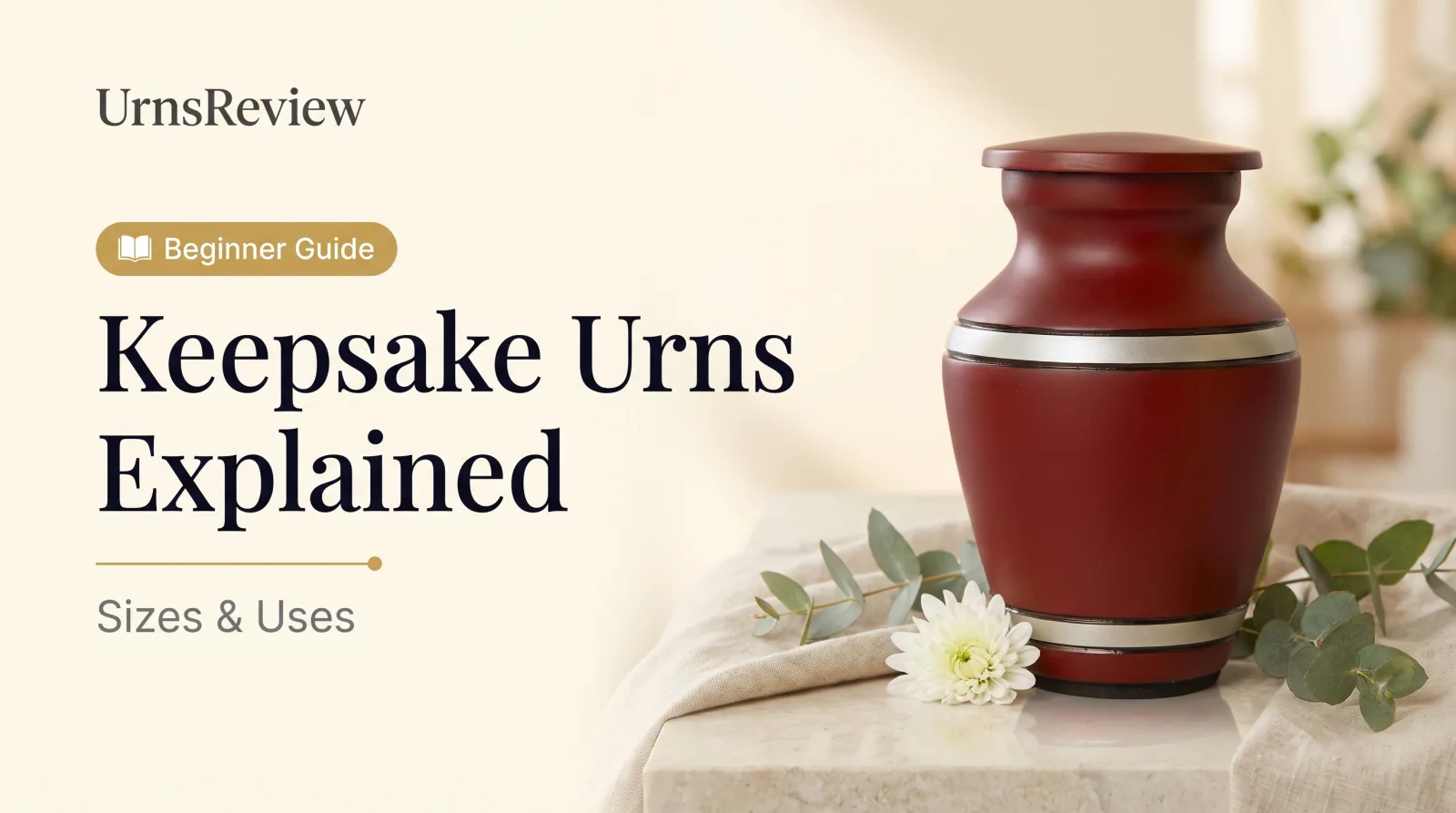
Keepsake urns typically hold 1 to 5 cubic inches, enough for a small private memorial. The Crimson Small Keepsake Urn is designed for exactly this purpose. Check the listing for current size and price before ordering.
For a complete look at how families use keepsake urns, including how to divide ashes respectfully, see our keepsake urns guide. And if you are thinking through all your options for the remains, our overview of what to do with cremated ashes is a calm, practical starting point.
Interior vs exterior: the measurement caution
This is worth repeating because it causes real problems.
A decorative urn with thick stone walls, a wide wooden base, or a heavy ceramic body can look large and still hold only 100 cubic inches inside. The exterior is not the capacity.
When you shop online, filter by interior cubic inches and ignore exterior dimensions when comparing capacity. If a listing does not state the interior volume, treat it as uncertain until confirmed by the seller.
The same caution applies to urns sold by funeral homes. Funeral homes are required to show you their price list but are not always careful about distinguishing interior from exterior measurements. The National Funeral Directors Association notes that more than 60 percent of U.S. deaths now involve cremation, which means most families are navigating this for the first time. Asking one simple question, "what is the interior cubic-inch capacity?", protects you from the most common sizing mistake.
How ash amount relates to bone, not body fat
Because the science is counterintuitive, it helps to say this plainly.
When a body is cremated, soft tissue (fat, muscle, organs) is vaporized. What remains is bone mineral, primarily calcium phosphate, which is then processed into the coarse powder you receive. The amount of that powder depends on skeletal size and density, not on the person's overall weight or their weight at death.
A 200-pound person who lost 40 pounds to illness before passing will leave roughly the same volume of ashes as they would have at their healthy weight. That is why the pre-illness weight is the better number to use when you calculate urn size.
Men generally produce more ash than women at equivalent weights because male bones tend to be denser and larger. CANA places the typical range at 183 to 213 cubic inches, which reflects both sexes across a wide range of builds.
Quick decision guide
| Your situation | What to choose |
|---|---|
| Standard adult, weight under 200 lb | 200 cu in urn |
| Adult up to 220 lb, want a margin | 220 cu in urn |
| Adult over 220 lb | 250-325+ cu in urn |
| Two adults together | Companion urn, ~400 cu in |
| Sharing a portion with a relative | Keepsake urn, 1-5 cu in |
| Child | Match to weight in pounds, 50-100 cu in typical |
| Infant | Under 25 cu in |
For more on choosing the right material once you have the size sorted, see wood vs metal vs ceramic urns. And for a full walk-through of every choice involved in buying an urn, the choosing and buying hub is a good next step.
Frequently asked questions
What size urn do I need for an adult? For most adults, a 200-to-220 cubic inch urn is the right size. The rule is one pound of pre-cremation body weight equals about one cubic inch of ashes. The Cremation Association of North America confirms a typical adult produces 183 to 213 cubic inches of remains. A 220 cu in urn fits the great majority of people with a small margin.
How much ash is left after cremation? An adult typically leaves 183 to 213 cubic inches of ashes, weighing 4 to 6 pounds. According to CANA, the volume is driven mostly by bone mass, not body fat, so late-life weight loss rarely changes the amount significantly. Men tend toward the higher end; women toward the lower.
What happens if the urn is too small? If the urn is undersized, the cremation provider will return the remaining ashes in a separate temporary container. To avoid this, choose an urn with a capacity at least equal to the person's pre-cremation weight in pounds. When the weight is uncertain, size up to 250 cubic inches or more.
Can one urn hold two people? Yes. A companion urn, typically around 400 cubic inches, is designed to hold the ashes of two adults together. Many couples choose this arrangement in advance. If only one person has passed, a full-size urn is fine for now and some families later transfer both sets of remains into a companion urn.
What size urn do I need for sharing ashes among family? Keep the majority of the ashes in a full-size urn (200 cubic inches or more) and use small keepsake urns for individual portions. Keepsake urns typically hold 1 to 5 cubic inches, enough for a meaningful personal memorial without dividing the main portion too much.
How do I size an urn for a child or infant? The same 1 lb equals 1 cubic inch rule applies. A child who weighed 50 pounds would need roughly 50 cubic inches. Small urns in the 50-to-100 cubic inch range are sold specifically for children. Infant urns are typically under 25 cubic inches. Always confirm the interior capacity with the seller before ordering.
Is urn size based on interior or exterior dimensions? Always interior cubic inches. The exterior of the urn can be much larger depending on wall thickness and base size. When a listing says '200 cubic inches,' that should refer to the internal holding capacity. If the listing only shows exterior dimensions, contact the seller to confirm the interior volume before buying.